
Peace Within, Peace Around
Finding inner stillness in an anxious world—and why cultivating personal peace helps heal the world around us.

This week, I continue my four-week series on the themes of Advent and their relationship with mental health: Hope, Peace, Joy, and Love.
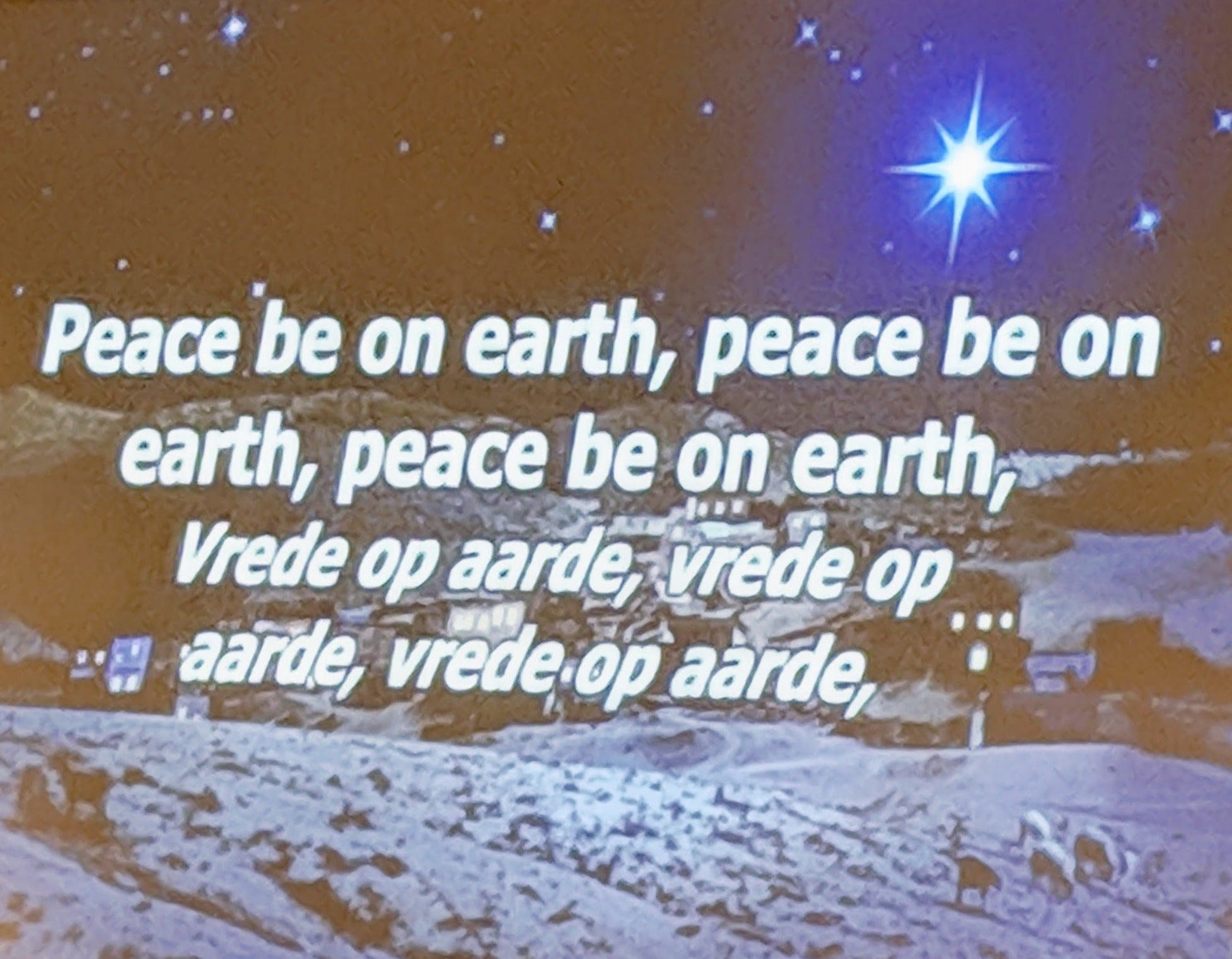
Growing up in our Dutch-Canadian immigrant community, Christmas was never complete in our hearts without singing the Dutch hymn, Ere Ze God. My favorite part came later in the song, as the melody shifted to a stiller rhythm and in collective sober meditation we sang the words, Vrede op aarde, vrede op aarde, vrede op aarde.
Peace be on earth, peace be on earth, peace be on earth.
Do you feel it? The ache, the longing, the hopeful anticipation of these words?
In a world increasingly torn by polarization and enmity, with the brutality of war ever in our view, with anxiety filling hearts as unfettered capitalism enriches billionaires at the expense of the collective economy, we need peace more than ever.
Peace between. Peace around. Peace within.
Anxiety rates are steadily rising. One in ten Canadians suffer from anxiety. In the USA, the picture is twice as grim, with nearly one in five Americans, or 40 million people, suffering an anxiety disorder. As democracy erodes, economies groan under the weight of reckless policy, and foreign wars intrude into our homes via social media, anxiety abounds.
The toll of anxiety, worry, and strife
Anxiety is expensive. It costs relationships, as we isolate to focus on calming our nervous systems and avoid overstimulation. Sometimes anxiety comes out in irritability and contributes to interpersonal tension. Anxiety is often expressed through efforts to control others or our environment, which, unsurprisingly, does not cultivate harmony or peace.
Anxiety costs lost productivity and lost wages, when we are distracted by ruminating thoughts or the anxiety becomes so overwhelming as to demand sick days. Illness-related anxiety leads to more doctor visits, and anxiety in general warrants time and expense spent on therapy and often medications.
But most of all, anxiety costs you peace.
Cultivating peace
No one chooses anxiety. But often people lack awareness of how to move away from it and toward inner and interpersonal peace. Anxiety may be situational and / or biological, but that doesn’t mean it is immovable. Here are some practical tips for reducing anxiety and cultivating peace in your heart and life:
- Check in with self regularly. Get to know your anxiety levels and tolerance. In the chronic illness community, there’s a metaphor of energy as “spoons” – how many spoons do you have today? It differs from day to day. Sometimes it is necessary to step back, say “no” to requests, and rest.
- Develop a repertoire of coping and stress-reduction skills and tools. Experiment to see what combination helps you most. What form of movement or exercise burns off adrenaline or grounds you? What entertainment makes you laugh and takes you away from worries? What sensory comforts (such as weighted blankets, warm tea, essential oils) bring stillness to your fluttering heart? What music or nature sounds (such as whale calls, birdsong, or rain) bring you peace?
- Don’t attend every conflict you’re invited to. You are allowed to choose your peace. Practice phrases for closing down inflammatory discussion, and give yourself permission to ignore when that approach feels best.
- Meditate. Learn to utilize your breath to slow your heart and draw oxygen to your brain. Practice presence with what is, rather than what you fear could come. Guided meditation apps can help!
- Focus on others. When we make efforts, no matter how small, to improve someone else’s day, the effect tends to bounce back on us. Other-focus can distract us from our own worries while giving us a boost of calming, happy serotonin.
- Sleep. Your brain cannot function well without adequate rest. If difficulty falling asleep is a symptom of your anxiety, with ruminating thoughts keeping you tossing and turning, breathwork, guided sleep meditations, or medications can help. Don’t ignore this foundational need.
- Reduce caffeine consumption. I know, I know. We love a steaming cuppa, especially in these colder months – but caffeine is a major contributor to anxiety, and it may just not be worth it.
- Watch your media consumption. Do you scroll angry tirades on TikTok before bed and then struggle to sleep or snap at your family? Choose what you take in with deliberateness. Limit stress-inducing news and choose reporting that is factual while avoiding click-bait and rage-bait sources. It is possible to be informed without being flooded.
- Focus on what you can control. When you worry about the future, you give your energy to what isn’t real. Perhaps cleaning out the junk drawer or removing clothes that no longer fit from your closet is the grounding exercise you need to increase your sense of personal power. Sometimes you reclaim power through civic, community, and political advocacy and involvement.
- Practice gratitude and deliberately note the good around you. Celebrate when things go right to re-wire negative self-talk from the “What if everything goes wrong?” script toward “What if everything works out?” – remembering that often, it does, and the worries we give so much energy to never come to pass.
- Explore therapy. Sometimes peace comes in solitude, but never in isolation. We need interpersonal supports. Our brains evolved or were designed to co-regulate with calm and grounded others. A therapist can be just such a person to help build inner peace as you process the stressors of life.
Peace be on Earth
“I am only one, but I am one. I cannot do everything, but I can do something. And because I cannot do everything, I will not refuse to do the something that I can do.”
― Edward Everett Hale
“We but mirror the world. All the tendencies present in the outer world are to be found in the world of our body. If we could change ourselves, the tendencies in the world would also change. As a man changes his own nature, so does the attitude of the world change towards him. This is the divine mystery supreme.”
― Mahatma Gandhi
This teaching is often summarized as “Be the change you wish to see in the world.”
Anxiety and global strife have reciprocal negative effects. The problems of the world can feel so big. And yet, I reiterate my encouragement to focus on what you can control. These words remind me every day that if and as each one of us cultivates inner peace and contentment, universalized, interpersonal and global peace will result. As we focus on healing and releasing our own anxiety, the world becomes one step closer to the dream of
Peace on Earth.
You may be able only to do so much, but that is enough.
May your heart find peace within and throughout the coming week and season.
From my heart to yours,
Deborah

This touched me deeply. The moment of singing Ere Zij God and repeating vrede op aarde felt so moving—like a shared longing that belongs to all of us.
I really appreciated how you connect global turmoil with the quiet inner struggle of anxiety. That line about anxiety “costing peace” stayed with me. Your practical ideas feel gentle and genuinely helpful rather than prescriptive.
Thank you for ending with hope. It’s rare to read something that acknowledges the ache and still invites us toward peace on earth, one heart at a time.
Practice presence with what is, rather than what you fear could come. THANK YOU.